






Honey Rush Demo Test Mode In Poland
Learn about the test mode of the Honey Rush game in Poland, set limits and check account functions before consciously risking funds.
How the Honey Rush Slot Demo Works in Poland
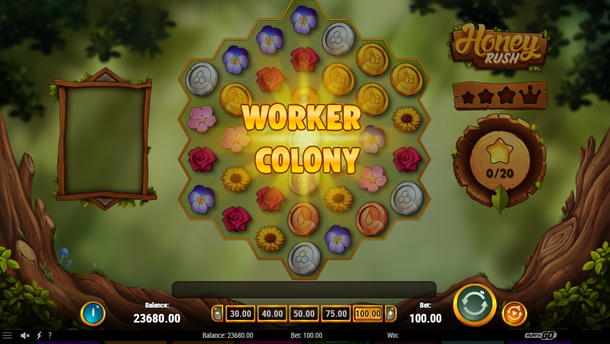
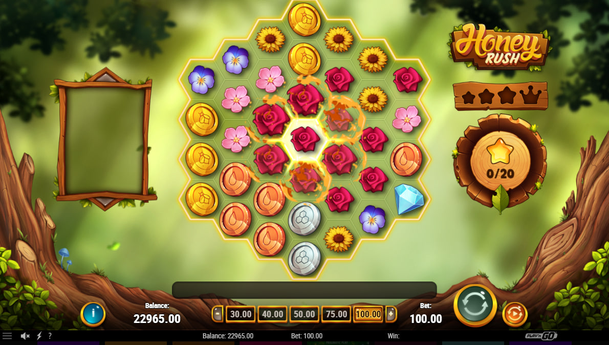
Let's start with what the player actually gets in test mode: the ability to check out the game without risking their wallet and without the pressure of a result. Imagine a situation where you have 10 minutes during a break and you just want to see what the board looks like, the pace of spins, and the behavior of special features. At such a moment, the virtual funds mode is simply a tool – it allows you to click, observe, and then exit without feeling like you "still need to get something back."
In 2026, most platforms ensure two things: account security and access rules for adults. Honey Rush is available in Poland and operates within the applied verification procedures, which is why sometimes some account functions may require confirmations before you can proceed to play for real stakes. This is normal. It's worth treating the test as a preparation stage, not as "almost the same, just for free."
What exactly can you check in this mode? First and foremost, the rhythm of the gameplay: whether the game is dynamic or rather calm, how often smaller hits appear, and whether bonuses seem rare or frequent. The second thing is readability: symbols, animations, win messages, settings menu. It sounds trivial, but if you're playing on a phone, the difference between a comfortable interface and a tiring one can ruin the entire session.
All promotional incentive structure is clearly stated in writing and/or via electronic means in an easily understood manner. All codes are accompanied by an explanation of what the code is for, who is eligible to use the code, and how it should be used. As such, players are less likely to be confused about what is required of them in order to receive a reward and how the reward will be applied after receiving it. The promotional incentives provided to participants provide them with time to become familiar with the gaming system's mechanics, their interface, and progress, before deciding how deeply they wish to become involved with this platform. Therefore, players are encouraged to participate in an informed manner, rather than being pressured or tempted to act quickly.
What to Check Before You Start Playing for Money
Most often, a player falls into a simple trap: "I'll play first, and I'll sort out the settings later." Imagine everything is moving fast, a series of emotions appears, and only then do you look for time and deposit limits. It works the other way around – common sense is at the start, not in the middle of the action.
Before you move on to playing for real money, take three short steps. First: check your account settings and responsible gaming tools (time limits, deposit limits, breaks). Second: set an entertainment budget and divide it into smaller parts so you don't fall into the "just one more moment" mode. Third: prepare a payment method you use daily – the fewer combinations, the fewer mistakes in confirmations.
In practice, how you react to the outcome is also important. It happens that after testing, someone enters the game "for real" and immediately raises the stakes, because they think that since it went well in test mode, it will be the same now. And this is the moment when the budget plan starts to fall apart. A better approach? You start calmly, observe for a few minutes, keep the stake stable, and only then decide if the pace suits you.
Session and Account Settings Worth Enabling
The biggest advantage of a mature player isn't a “secret strategy,” but settings that cut off impulses. Imagine playing in the evening after a tough day and wanting to relax, but at some point, your hand clicks faster on its own. Then, it's not willpower that wins, but the time limit and break reminders.
By 2026, simple tools you can enable before a session are standard: a time limit, a deposit limit, and sometimes even a self-exclusion for a specific period. If you treat this like a seatbelt, the game suddenly becomes calmer – because you have a framework, not an open-ended experience.
Time and Budget Limits Step by Step
First, choose your session time. Short and to the point. Imagine telling yourself, “I'll play for five minutes,” and then two hours pass, and you don't even know when – limits exist precisely to interrupt this. Set a framework (e.g., 20-30 minutes), add a reminder halfway through, and at the end, take a break, even if “it's going well.”
The second thing is the budget. Don't set it based on dreams, but on comfort. If you have an amount in mind whose loss won't ruin your day, that's a good base. Then you divide it into parts: one part for the first session, another for the next – and only after a break. This small division changes everything, because you stop playing “all at once” and start playing “in episodes.”
Testing Game Features Without Pressure
Test mode is best for checking game behavior, not for proving anything to yourself. Imagine a situation where you see a special feature and want to “see it again,” so you keep spinning until you finally lose patience. Instead, approach it like a test: you check the menu, speed settings, winning rules, and whether you understand the messages on the screen.
It's also good to check how the game behaves on your device: whether you lose information at a fast pace, or if you don't get bored after a few minutes at a slower pace. Often, players discover they prefer a calmer rhythm, because then it's easier to stick to the plan and not fall into automatic clicking.
Short Checklist Before the First Session
Before you start playing for real money, make a short checklist: set a time limit, set a deposit limit, check if you understand the winning rules, test the speed of spins, make sure you have a break planned in advance. It's just a few clicks, and then you don't have to negotiate with yourself in the middle of emotions.
How to Assess Game Pace in Practice
You'll best assess the pace in short bursts. Play a few minutes calmly, then a few minutes faster, and finally return to a slower mode and see what tires you out and what gives you comfort. Many players only then realize that “fast” is fun for a while, but in the long run, it cuts into budget control.
Deposits, Withdrawals, and Verification in 2026
Most of the stress doesn't come from the game itself, but from transactions and formalities. Imagine that after a successful session, you want to end the day feeling that everything is settled, and suddenly a message about additional confirmation appears. This doesn't necessarily mean a problem – in 2026, security and verification procedures are standard, especially when the platform operates under the rules available to users from Poland.
Be prepared for the transaction time to depend on the method and account stage. Deposits can be fast, withdrawals may require verification. The best way to avoid frustration is to keep your data in order and use one verified payment method.
Area | What's Worth Setting Up | Why Do It | What to Watch Out For |
Payment method | One main method | Fewer errors and confirmations | Data consistency with the account |
Deposit limits | Daily and weekly limit | Entertainment budget control | Too high a limit "in reserve" |
Confirmations | Authorizations in the bank or wallet | Transaction security | Haste and errors in amounts |
Data verification | Up-to-date profile data | More efficient withdrawal processing | Illegible documents and discrepancies |
Contact with support | Preferred form of contact | Faster resolution of issues | Missing transaction number in the report |
How Players Usually Make Their First Deposit
Most often, it looks like this: a quick decision, a small amount “to check,” then back to the game. Imagine doing this on the fly and clicking confirm without checking the data – and then wondering why the payment didn't go through. It's worth doing the opposite: calmly choose the method, check the limits, make sure you have a session time limit set, and only then confirm.
The first deposit is also a good time to set your own rules: do I add funds in the same session, or do I take a break and come back another time? The simple rule “I don't add during” often saves the budget because it cuts off the impulse.
How to Request a Withdrawal Without Errors
Withdrawals like order. Imagine you want to withdraw funds, but in your profile, you have a typo in your surname or the data is recorded differently than in the document – then the process can stop. Before you request a withdrawal, check your profile data, choose a method consistent with the platform's rules, and make sure everything is coherent.
Don't treat verification as an obstacle, but as a security stage. If the platform asks for data confirmation, do it properly once: clear photos, consistent information, no rush. In practice, this shortens the process because you avoid rejection and resending.
When Contacting Support Saves Time
Support is useful not only when something is broken. Imagine you see an unclear transaction status or don't know where to enable a break on your account – a quick conversation can resolve the issue in a few minutes. It's good to have basic information at hand: time of report, payment method, estimated amount, message description.
It's also worth asking about responsible gaming tools if you feel the pace of the session is drawing you in. This is practical because instead of fighting the impulse, you set a block or a limit and have peace of mind.
Common Mistakes When Playing in Demo Mode
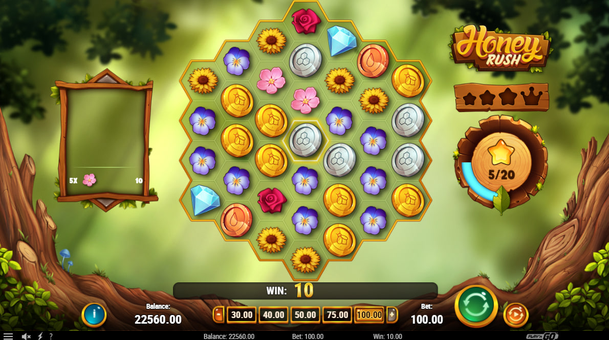
Test mode is great, but it has one drawback: it can give a false sense that “it will always be like this.” Imagine that in the test, everything goes smoothly, so you assume the game is “easy,” and then in a real session, emotions and stakes take over. The most common mistakes result not from a lack of knowledge, but from haste.
Instead of treating the test as a warm-up for risk, treat it as a check of the game's behavior and your own reactions. How quickly do you pick up the pace? Do you feel like “more right away”? Can you end the session when the plan runs out? These are more important questions than “will a bonus drop”.
Raising the Stakes Without a Plan
This is a classic. Imagine you play calmly for a while, and then you think: “I'll increase it for a moment, see how it feels.” This “moment” often triggers a series of subsequent decisions, and suddenly the budget disappears faster than you anticipated. If you want to test different stakes, do it in separate short blocks, with a strict round limit and without adding funds during the process.
In a real game, the stake is not just a number – it's the rate at which the budget is burned. That's why stake stability is an ally, and jumping up and down usually ends in chaos.
Playing in Haste and Without a Break
Fast clicking can turn entertainment into automatism. Imagine you're playing “in the background” during a conversation or while watching something, and you don't even register the results. This is the moment you lose control over your decisions. A break is not a punishment – it's a reset.
A good solution is a simple rhythm: a few minutes of play, a short break, a budget check, and only then the decision to continue. It sounds ordinary, but it's ordinary habits that protect against impulse.
Confusing Fun With a Method for Profit
It happens that someone enters the game with the attitude “I'll handle this like a system.” Imagine that after a few good rounds, you start to believe you've discovered a pattern, so you want to repeat it – and when it doesn't work, anger and the desire to make up for losses appear. This is the shortest path to bad decisions.
A better approach is simple: you treat the game as entertainment, and the budget as the cost of that time. If the result is good – great. If not – you finish as planned, instead of “tightening the screw”.
How to Transfer Settings From a Test to a Real Game
A test only makes sense if you draw conclusions. Imagine that in the test you preferred to play slower and calmer, but in a real session you immediately speed up because the emotions are greater. It's like learning to brake on an empty road and then driving without a seatbelt.
Transfer what worked: pace, time limit, breaks, fixed stake. If you need to, enable additional tools: deposit limit, block after a certain time, reminders. This way, the real session looks similar to the test – and not like a completely different game.
Who This Slot Is For And How To Approach It Sensibly
This is a proposal for people who enjoy simple entertainment but want to maintain control over pace and budget. Imagine you're not interested in “sitting for hours”, but just a short session after work, without nerves and without proving anything. In such a setup, two elements are key: account settings and consciously ending the session.
Honey Rush in Poland is available to adult users and should be used in accordance with responsible gaming principles. If you feel that sessions are starting to lengthen or the stake is increasing “on its own”, it's a sign to take a break or a block. It's not a drama, just hygiene – just like turning off your phone when you want to rest.
Quick Plan For 20 Minutes Of Entertainment
Keep it simple. Imagine you have exactly 20 minutes and then you go back to your affairs – no negotiations. Set a time limit for the session, choose a fixed stake, plan a break halfway through, and stop at the end regardless of the outcome.
If you want to add one rule, choose this one: no adding funds during the same session. This way, even when emotions run high, the plan remains the plan. And if you still feel like playing after the break, you'll come back with a new decision and a new limit, not out of momentum.
FAQ
How does the test mode work in practice?
In practice, you get virtual funds and can start a game without risking your budget, to check the pace, menu, and behavior of special functions. Imagine you're launching a game on your phone and want to understand if the interface is clear and if the rhythm suits you – then the test is ideal. It's best to treat it as a test of convenience and rules, rather than an attempt to "force" a result.
Do you need to create an account to test the game?
It depends on the platform settings and how the test mode is provided, because sometimes access is quick, and sometimes it requires basic configuration. Imagine a situation where you just want to see the mechanics, but the system asks for additional steps – then it's worth doing them calmly, instead of clicking in a hurry. If you have the option to start the test without full configuration, treat it as an introductory phase, and leave the decision to register for later.
What account settings are worth enabling before playing for real money?
Time limits, deposit limits, and break reminders help the most because they cut off impulses. Imagine you're playing "for a bit" in the evening, and then suddenly a lot of time passes – a reminder can stop the automatism. A good habit is to set the frameworks before the session starts, when decisions are calmer.
How do I assess if a game is for me if I test it briefly?
Focus on three things: whether you understand the rules, whether the pace doesn't tire you out, and whether you can end the session as planned. Imagine that after a few minutes you feel the need to speed up or raise the stakes – that's a signal of how you react to emotions. If short tests end calmly, it's easier to transfer that control to real gameplay.
What to do when I lose track of time during a game?
First, stop the session and take a break away from the screen, then go back to the limit settings. Imagine it was supposed to be 10 minutes, but it turns into an hour – that's a sign you need stricter frameworks, not stronger willpower. Automatic breaks and time blocks also help, because you don't have to "win" against an impulse in the midst of emotions.
Can you play responsibly without complicated rules?
Yes, if you have a simple plan and stick to it consistently: a time limit, a budget limit, and ending the session regardless of the outcome. Imagine stopping after the set time even when “it’s going well” – that’s what control means. The simpler the rules, the easier they are to maintain, especially when emotions run high.
How to transfer test experiences to a real session?
Transfer what worked: game pace, breaks, a stable stake, and timeframes, not just the feeling that “it was fun.” Imagine that in the test you played calmly, but in a real session, you immediately speed up – then you lose what gave you comfort. Write down one short rule to start and enable limits before the first spin, so that the real session resembles a test, not a completely different experience.